
Last updated November 25, 2026
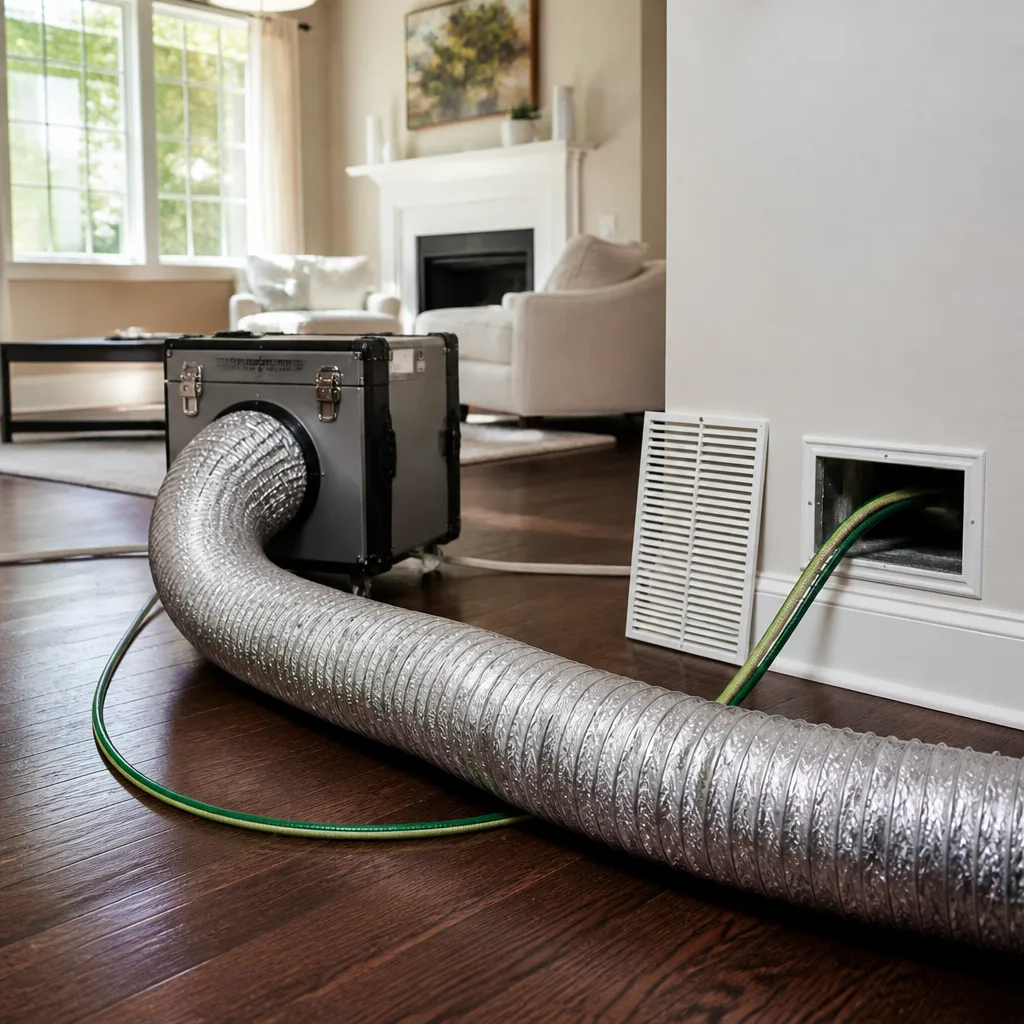 Whole-home duct cleaning
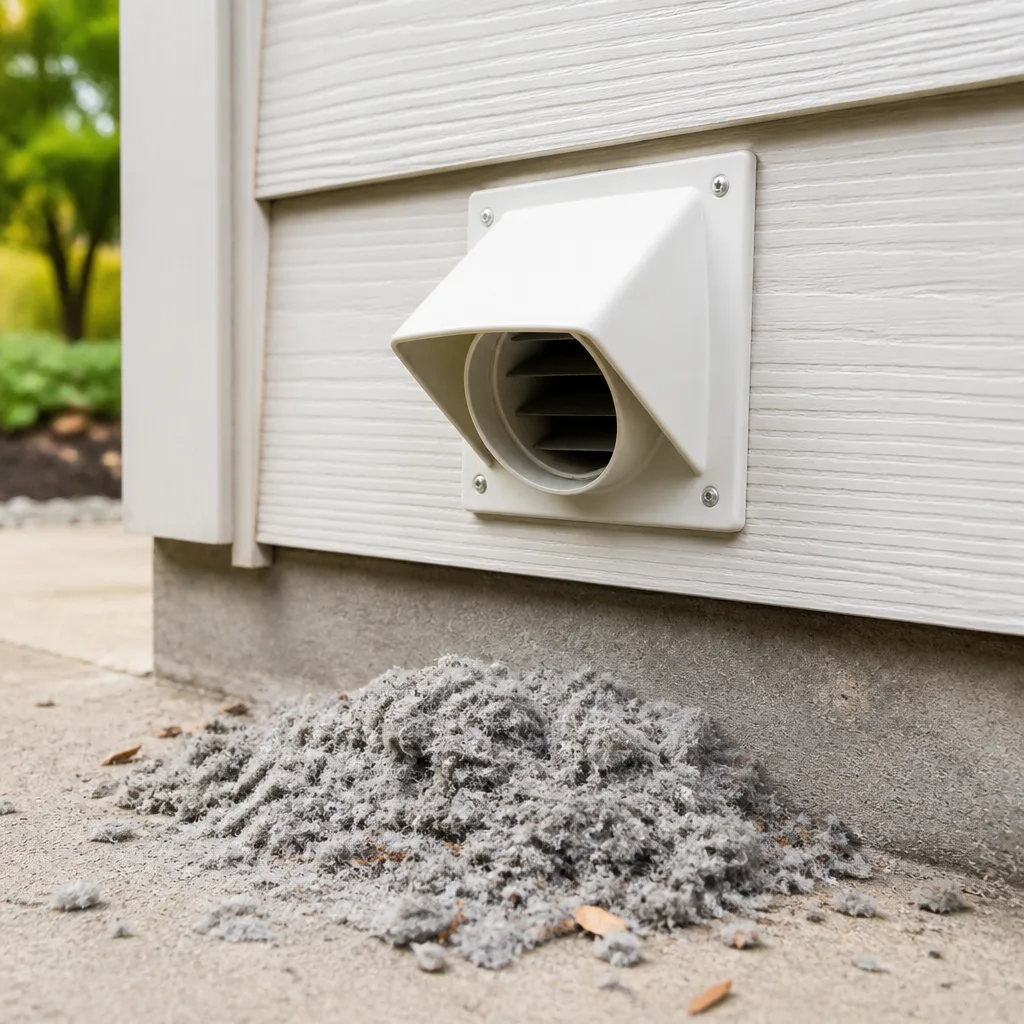 Dryer vent cleaning
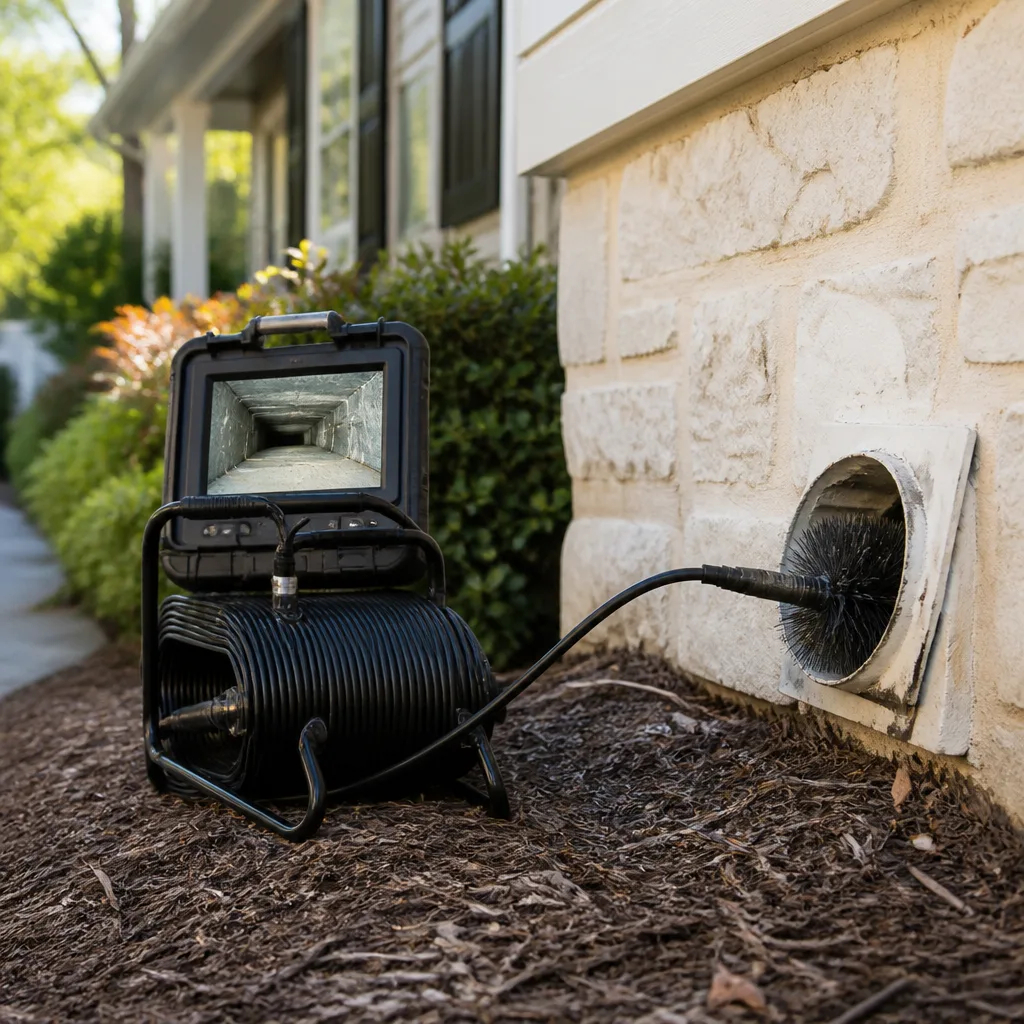 Camera inspection
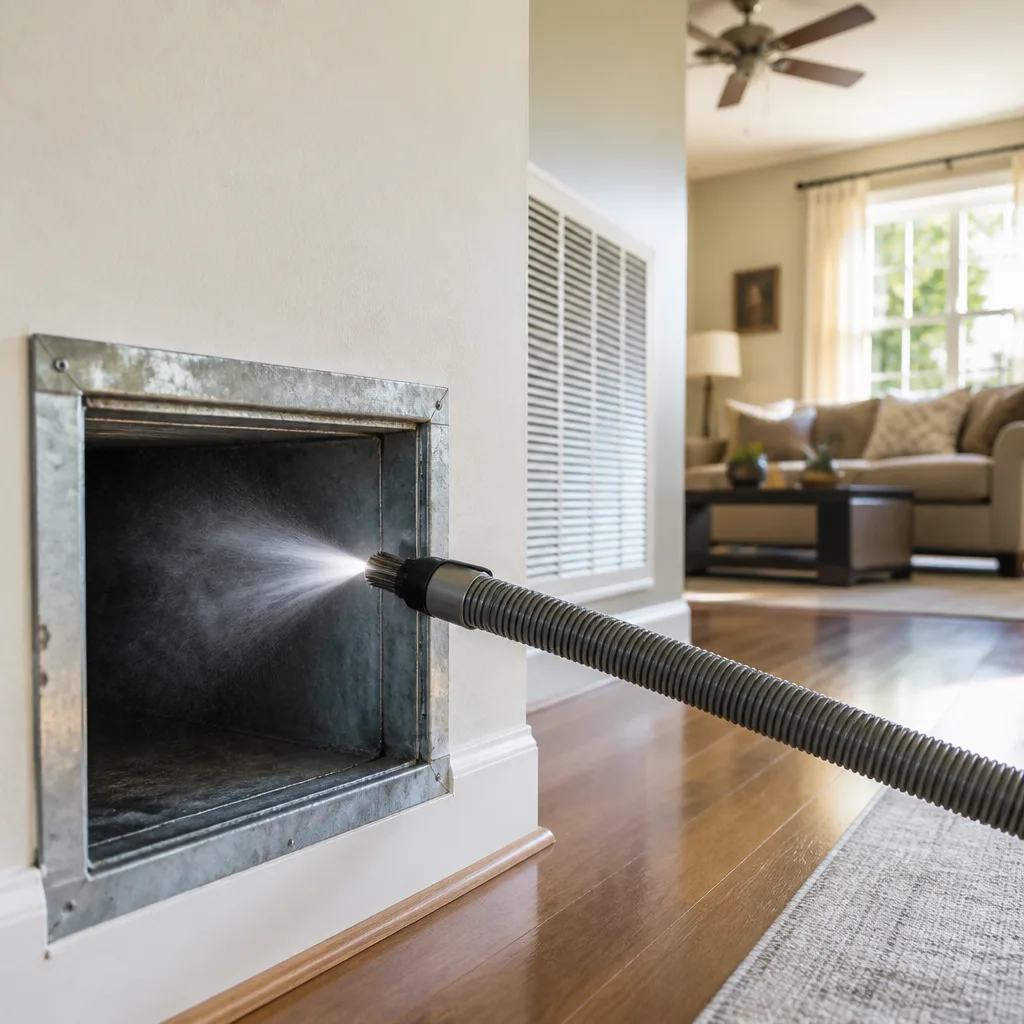 Sanitizing & deodorizing
Whole-system duct and dryer vent check with before-and-after photos - you see exactly what came out of your vents
That "$99 whole-house special" is a bait ad - the real number appears once they are in your hallway, or the "clean" is a shop-vac at the register. We photograph the inside of your ducts before and after instead.
Air Duct Cleaning Permits, Codes & Inspections in Holmesburg, PA: What You Need to Know
No permit is needed to clean your ducts – but if the technician recommends sealing breaches or replacing flex duct sections while they’re inside your system, you may have just entered permitted work territory without knowing it. That surprise comes up more often than you’d think. Duct cleaning itself sits outside Pennsylvania’s construction code as a maintenance task, while the repair and modification work that often gets recommended mid-visit can fall squarely inside it. In this guide we walk you through what needs a permit and what doesn’t, how Philadelphia’s Department of Licenses and Inspections handles Holmesburg jobs, and why mold remediation proposals deserve extra scrutiny here. If you own an older home in Holmesburg, this is the distinction worth understanding before you approve anything.
Quick Answer
Air duct cleaning does not require a permit in Holmesburg or anywhere else in Pennsylvania. It’s a cleaning and maintenance service, not construction, so it falls outside the Uniform Construction Code. What can require a permit is adjacent work: replacing duct runs, cutting into an HVAC cabinet, altering exterior wall penetrations for a dryer vent, or certain remediation projects. Permits for Holmesburg work come from the City of Philadelphia’s Department of Licenses and Inspections, not a suburban township office.
Styles & brands we work with
- Whole-home duct cleaning
- Dryer vent cleaning
- Camera inspection
- Sanitizing & deodorizing
Table of Contents
- Why duct cleaning sits outside Pennsylvania’s permit rules
- When does duct work cross into permitted territory?
- Mold remediation and Pennsylvania’s licensing gap
- Who has jurisdiction in Holmesburg: L&I vs. suburban townships
- Dryer vent cleaning vs. dryer vent rerouting
- What an inspection actually looks like
- How to evaluate a contractor’s code questions
- How Holmesburg’s housing stock shapes the answer
Why Duct Cleaning Sits Outside Pennsylvania’s Permit Rules
Pennsylvania’s Uniform Construction Code (UCC) governs construction, alteration, repair, and demolition of buildings and structures. It regulates work that changes the physical structure of a building or its systems in a way an inspector needs to verify. Cleaning doesn’t do that. You are removing accumulated dust, debris, and biological growth from a duct system that stays exactly where it was. No new material goes in, nothing structural changes, and no system is reconfigured.
The same logic that keeps carpet cleaning out of the permit office applies to duct cleaning. It’s a maintenance activity performed inside an existing assembly. The UCC doesn’t require a permit for it, and that’s true whether the ductwork serves a rowhouse in Holmesburg or a new build in a suburban township.
What catches homeowners is that the visit itself is unpermitted, but recommendations made during it may not be. A technician working inside your system has access to areas you can’t see from a register. If they find disconnected joints, crushed flex, or a compromised cabinet seam, the fix can cross a line from cleaning into alteration. That’s the moment to slow down and ask what kind of work you’re actually approving.
A few things a standard cleaning visit does not require:
- No building permit from the City of Philadelphia
- No zoning approval
- No inspection sign-off before the work begins
- No notarized contracts or municipal filing
If a company tells you the cleaning itself needs a permit, that’s a sign they either don’t understand the rules or are building a fee into your quote. Either way, ask questions. Our team at Air Duct Cleaning Holmesburg is happy to walk through what a visit actually involves before you decide.
When Does Duct Work Cross Into Permitted Territory?
Here’s the practical line: if the work alters the mechanical system in a way an inspector needs to verify, it usually needs a permit. Cleaning removes material. Alteration changes the system. Those are different categories under the UCC, and only the second one triggers the permit requirement.
The work that typically crosses that line:
- Duct replacement. Removing old rigid duct and installing new runs changes the system’s layout and airflow characteristics. That’s an alteration, and in Philadelphia it generally requires a mechanical permit.
- HVAC cabinet modification. Cutting a new opening into an air handler cabinet, changing supply plenum dimensions, or relocating a return drop is structural work on the mechanical unit, not maintenance.
- Adding or relocating registers. New penetrations in walls, ceilings, or floors for a register or return that didn’t exist before are construction activity.
- Remediation involving structural materials. If contamination has reached wall cavities, joist bays, or sheathing and requires opening finishes, that’s a different scope of work from cleaning duct interiors.
- Dryer vent rerouting that penetrates an exterior wall. More on this below, but modifying an exterior penetration is a construction activity, not a cleaning task.
Duct sealing is the gray zone. Sealing accessible joints from inside the duct with mastic or aerosol applied through a register is generally treated as maintenance. Tearing into a wall to access and seal a hidden joint, or rerouting a run, tilts toward alteration. A good contractor will tell you which side of the line you’re on before they touch anything, not after. Our air duct cleaning service addresses cleaning and inspection; if we find something that requires an alteration, we tell you so you can decide whether to pull a permit.
Mold Remediation and Pennsylvania’s Licensing Gap
Pennsylvania does not license mold remediation contractors. There is no state-issued credential, no mandatory certification, and no state-run registry of approved remediators. That’s a real fact worth knowing before anyone sells you a remediation service.
What does exist is the federal EPA framework and a set of industry standards published by organizations like the IICRC and ACGIH. These provide the “how,” but they don’t create a licensing requirement in Harrisburg. In practice, anyone with a truck and a sprayer can call themselves a mold remediator in this state.
What that means for you as a Holmesburg homeowner evaluating an add-on proposal:
- Ask what the remediation scope is precisely. “Sanitizing the ducts” and “remediating a contaminated HVAC system” are different jobs.
- Ask what containment the crew uses. Real remediation involves negative air pressure and sealed barriers to prevent spores from migrating to other rooms. If they don’t have Abatement Technologies-grade negative-air equipment, the scope is probably lighter than the name suggests.
- Ask for the post-remediation verification method. A visual walkthrough is minimal; air sampling by an independent third party is more credible.
- Ask whether a licensed industrial hygienist is involved for a larger contamination issue. For significant mold growth, an independent assessment before remediation is money well spent.
Our HVAC cleaning work uses Abatement Technologies negative-air equipment because the same tools that serve remediation crews handle sensitive cleaning environments properly. We’re careful to describe what equipment we bring and what it accomplishes. That’s the standard that actually matters, since the state doesn’t require a license to prove it.
Who Has Jurisdiction in Holmesburg: L&I vs. Suburban Townships
Holmesburg is a Philadelphia neighborhood, and that matters more than most homeowners realize. Permit authority in the city rests with the Department of Licenses and Inspections (L&I), which administers the UCC as Philadelphia’s code official. If a Holmesburg project requires a permit, you file with L&I, not with a suburban township office in Bucks or Montgomery County.
This is a practical distinction. Suburban townships often have separate code offices, different fee schedules, and their own quirks about what qualifies as alteration versus repair. A contractor who typically works in Warminster or Upper Moreland may quote you a permit process that sounds right for Lower Bucks but doesn’t match what L&I expects for a Northeast Philadelphia address.
The homeowner-side implications:
- When you file, use the property’s actual address in the city. A Holmesburg property goes through L&I.
- Contractor licensure in the city is separate from state registration. A contractor working in Philadelphia needs the appropriate city license and must be registered with the state’s Attorney General’s office for home improvement work.
- Zoning questions (if you’re changing how a room functions, not just its HVAC) go through a different city department, but L&I is the entry point for most residential work.
- Inspection scheduling runs through L&I’s system, and wait times vary, so build that into any project timeline.
For routine duct cleaning, none of this applies. But if you’re staring at a proposal that involves duct replacement or a mechanical alteration, verify the contractor is set up to work with L&I properly. It’s a quick phone call, and it tells you a lot about the operation.
Dryer Vent Cleaning vs. Dryer Vent Rerouting
Dryer vent cleaning is one of the most underrated safety services in any home, and it requires no permit. It’s a routine maintenance task that removes accumulated lint from a vent run, reducing the fire risk that builds up when lint collects near the dryer or along the duct path.
Dryer vent rerouting is a different job with a different rulebook. If the vent currently exits through a wall, and the proposal is to move that exit to a different spot on the exterior, that’s a modification to the building envelope. In Philadelphia, that typically requires a permit through L&I. Altering an exterior wall penetration means cutting siding, framing an opening, sealing it properly, and verifying the work meets code for moisture and weather-tightness.
Here’s how the two compare:
| Task | Permit needed? |
|---|---|
| Cleaning an existing dryer vent run | No |
| Replacing a flexible vent with rigid metal in the same location | Generally no, if it stays in the same pathway |
| Rerouting a vent to a new exterior wall location | Often yes, through L&I |
| Extending a vent run to reach an exterior wall where none existed | Often yes |
The distinction matters because some vent “cleaning” quotes blur into rerouting without saying so. If a company tells you the existing vent is too long, too crimped, or improperly routed, ask whether the corrective fix requires a permit and who is responsible for pulling it. Our dryer vent cleaning service stays on the cleaning side of that line unless you specifically ask us to quote a reroute – in which case we’ll tell you a permit is likely needed and let you decide.
What an Inspection Actually Looks Like
A duct cleaning visit doesn’t trigger a municipal inspection, but the work companies perform should still be verified. The verification is on you, and it’s straightforward if you know what to look for. We’ve seen enough disappointing jobs to know what separates a real clean from a quick pass with a shop vac.
Here’s a practical checklist for a homeowner verifying work:
- Before-and-after photos of your own ducts. A reputable operation takes interior photos at the start and finish, showing the same sections. You should be looking at your system, not a stock gallery.
- Negative air verification. The technician should be able to show the system was under negative pressure during cleaning, using a HEPA vacuum or machine like the Nikro equipment we carry. If they can’t, particles were probably being stirred up rather than extracted.
- Register removal and reinstallation. Every supply and return register should be removed to clean behind it. If they didn’t touch the registers, the job is incomplete.
- HVAC unit access. The air handler access panels should come off so the blower and coil face can be cleaned. Skip that step and you leave the largest particle reservoir untouched.
- Documented scope. A written scope before work starts defines exactly what will be cleaned. If the scope changes mid-visit, that’s a conversation, not a silent addition.
When the work does require a permit – say, for a duct replacement done alongside cleaning – the inspection is L&I’s job. They verify the alteration meets code, not the cleaning quality. Those are separate standards and neither one substitutes for the other. Our team uses Rotobrush contact cleaning specifically because it leaves visible verification: the before-and-after comparison is real, not a sales memory.
How to Evaluate a Contractor’s Code Questions
A contractor who understands the permit line will volunteer the distinction. A contractor who doesn’t will either insist cleaning needs a permit (a red flag) or gloss over the fact that their recommended repair does (also a red flag). Either way, the questions you ask in the first conversation tell you most of what you need to know.
Questions worth asking up front:
- “If you find a duct that needs replacing, does that require a permit in Philadelphia, and will you pull it?” A straight answer to this separates a professional from a salesperson.
- “Which code body handles permits for my address?” The correct answer in Holmesburg is Philadelphia’s L&I. If they say anything else, they’re not working in the city often.
- “What equipment are you using?” Real cleaning requires a negative air machine and contact cleaning tools. A shop vac and a rotary brush attached to a drill is not professional equipment.
- “Do you perform remediation-level work, and with what containment?” Abatement Technologies gear is a legitimate indicator of serious capability. A vague answer means the remediation offer is a marketing line.
- “What do you leave me at the end of the visit?” Before-and-after photos, a written scope, and a clear sense of what was cleaned should be on the list.
We operate with Rotobrush and Nikro systems and carry Honeywell and Aprilaire product knowledge because we handle whole-home air pathways, not just the ducts. That scope matters when a homeowner has questions about filtration upgrades, humidifiers, or sealing alongside the cleaning itself. Our technicians have up to 12 years of experience, and the most useful thing that experience buys you is an honest answer about what needs a permit and what doesn’t.
How Holmesburg’s Housing Stock Shapes the Answer
Holmesburg sits in the Northeast Philadelphia stretch along Frankford Avenue and the Delaware, and its housing stock reflects a long history of rowhouse building. Many of the homes along neighborhood streets like Rhawnhurst-adjacent blocks, Pennypack-area properties, and the quieter stretches off Torresdale Avenue have duct systems that were retrofitted rather than built in from the start. That matters for what shows up during cleaning.
Retrofit ductwork from decades ago tends to use flex runs tucked through bulkheads and chases. It’s often shorter than ideal, with tighter bends and more joints than a modern design would allow. Cleaning these systems well takes patience, and the joints are where disconnections and leaks accumulate. When a technician finds a joint that’s come apart, the question is whether reconnecting it stays inside the cleaning scope or tips into alteration.
Northeast Philadelphia’s climate is another factor. Hot, humid summers and cold winters mean a system that has run through many cycles, and condensation in poorly insulated runs is common. Over time that moisture feeds biological growth, which is why remediation proposals appear on the table. Holmesburg homes also tend to have basements with partially finished spaces, and ductwork that runs through them is often the first thing a technician examines.
The permits question in Holmesburg is less about the climate and more about what the climate has done to the ducts over time. Moisture damage begets remediation, remediation begets containment, and containment sometimes means opening a wall. Each step answers a question the prior step raised. A straightforward cleaning visit in a Holmesburg home usually stays unpermitted. It’s the downstream conversations that decide whether that changes.
Common Mistakes to Avoid
- Assuming all duct “repair” is unpermitted. Reconnection and resealing an accessible joint usually stays on the cleaning side. Cutting new supply penetrations or changing the air handler cabinet configuration is alteration and can require a permit from Philadelphia L&I.
- Treating mold remediation as a licensed profession in Pennsylvania. It isn’t. There’s no state license, so the credential you need to verify is equipment, containment, and post-remediation verification, not a piece of paper that doesn’t exist.
- Assuming suburban permit rules apply in Holmesburg. Holmesburg is Philadelphia, and L&I holds jurisdiction. A contractor working mostly in Bucks or Montgomery County may have the wrong mental model for your address.
- Not asking whether a dryer vent reroute needs a permit. New exterior wall penetrations generally do. If the vent plan involves cutting a new hole through the wall, that’s a construction project, not a cleaning task.
- Accepting a “sanitizing” add-on without asking what it accomplishes. Sanitizing has its place, but if the underlying contamination is significant, sanitizer alone doesn’t resolve it. The remediation discussion needs to come before the sprayer comes out.
- Approving a mid-visit scope change without understanding the permit implication. If the cleaning just became duct replacement, you should know whether the work needs a permit before you approve it.
- Assuming a low quote guarantees a professional clean. Per-system pricing avoids per-vent games, and every quote should specify exactly what’s in scope so you can compare like for like.
See the difference
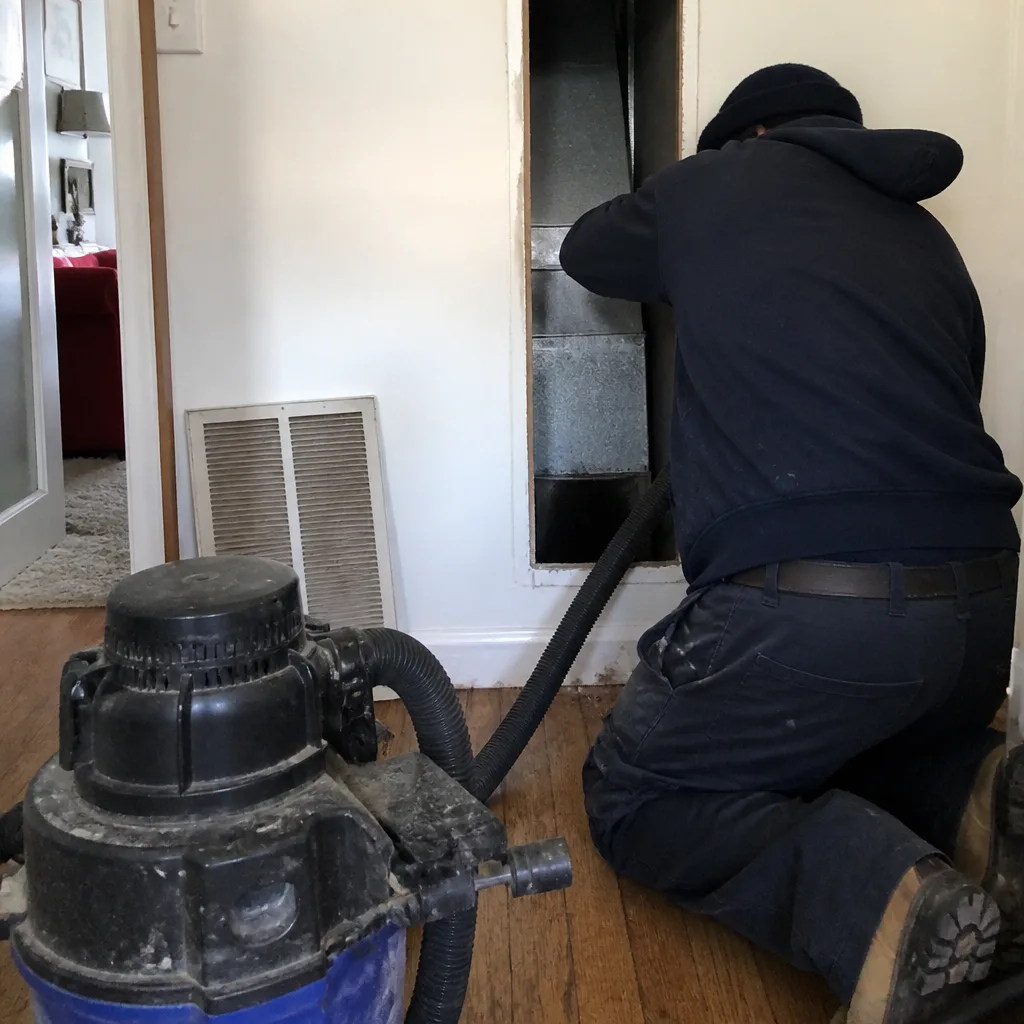 Before
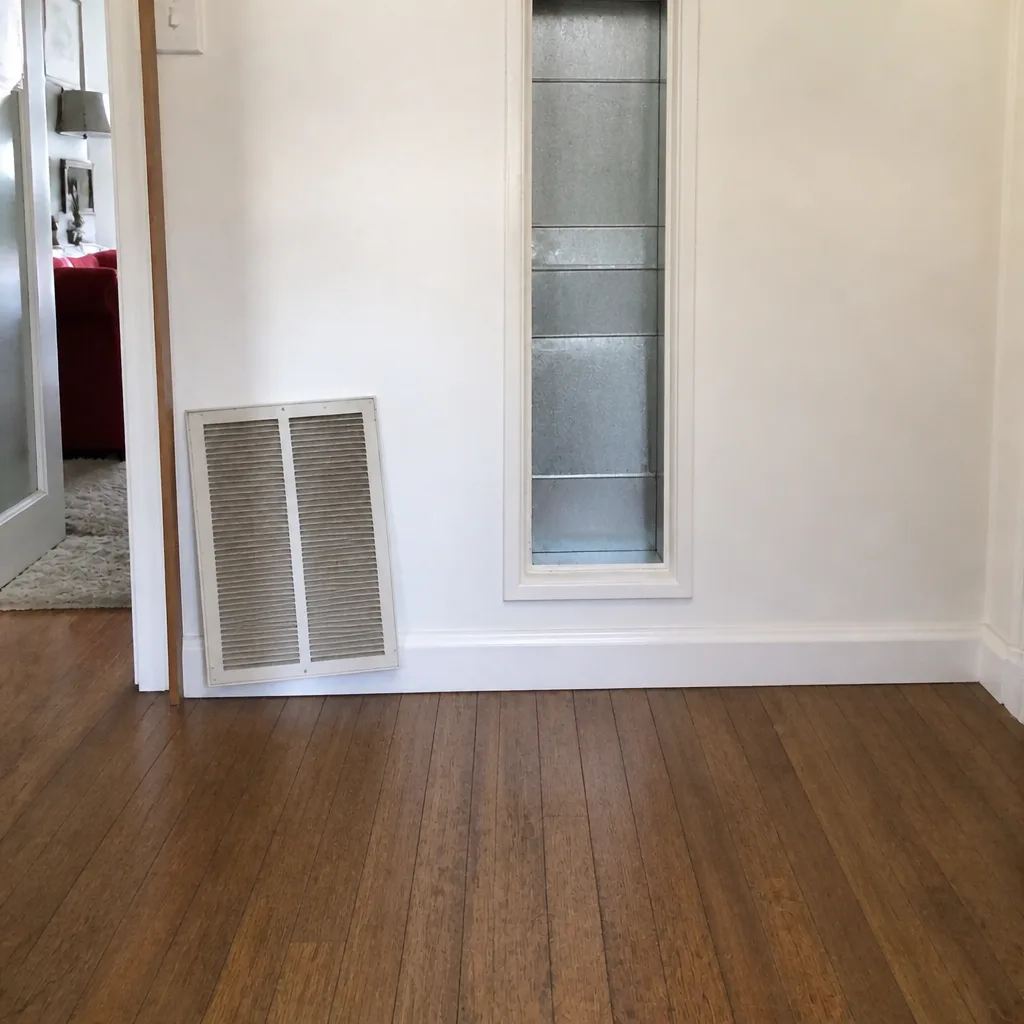 After
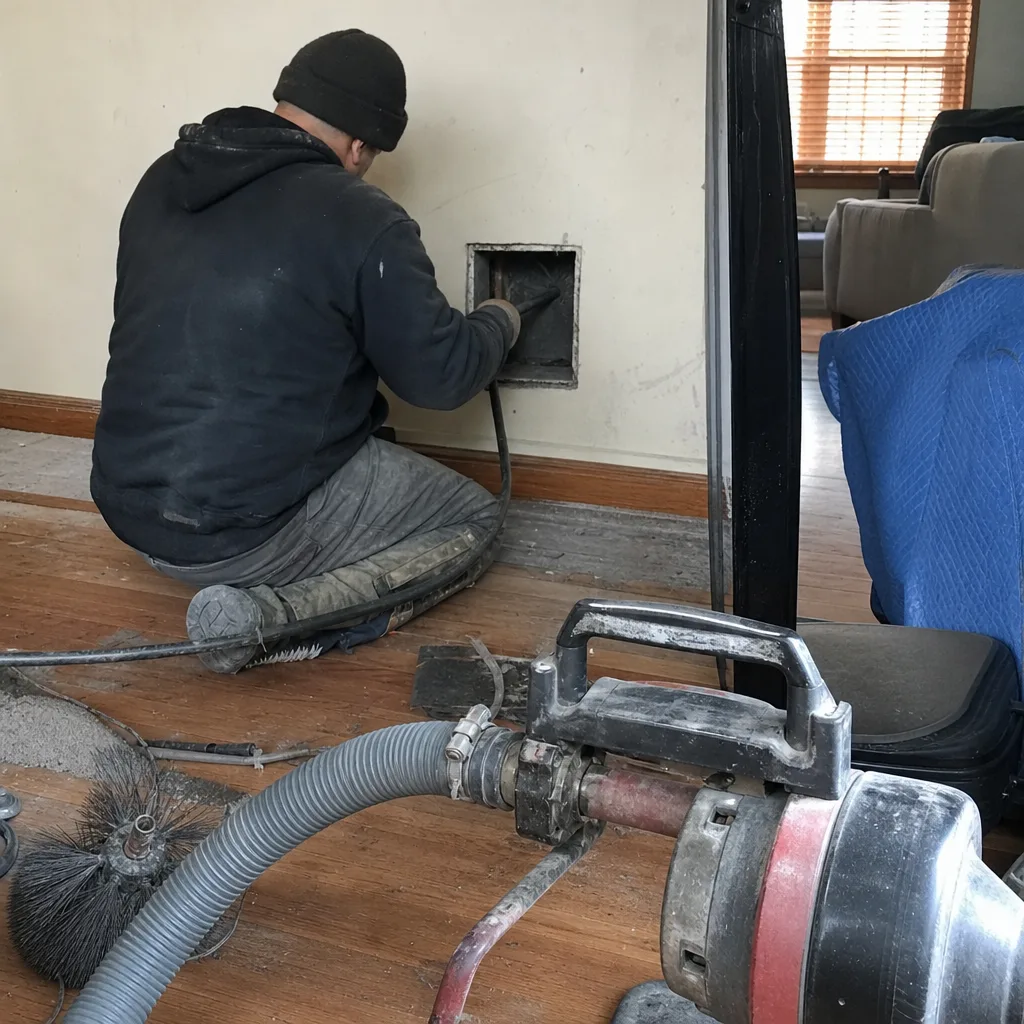 Before
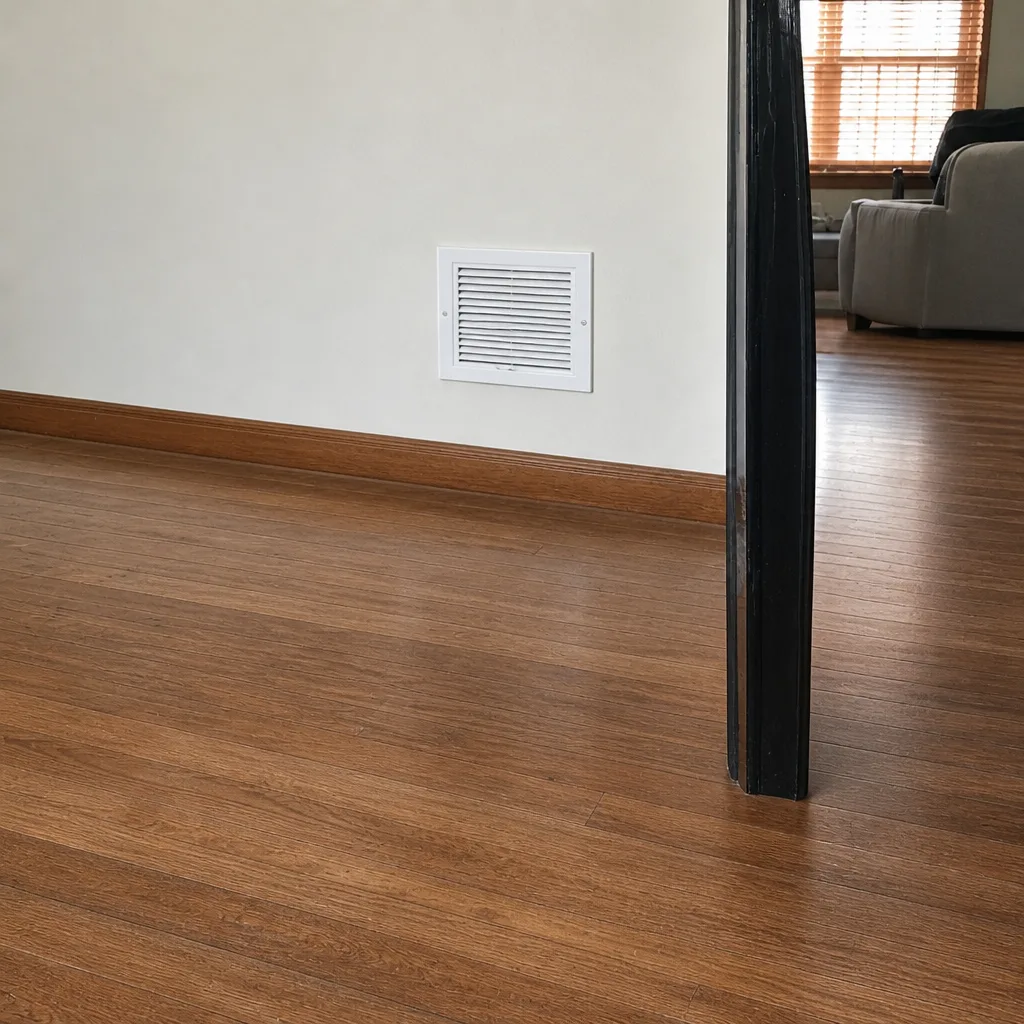 After
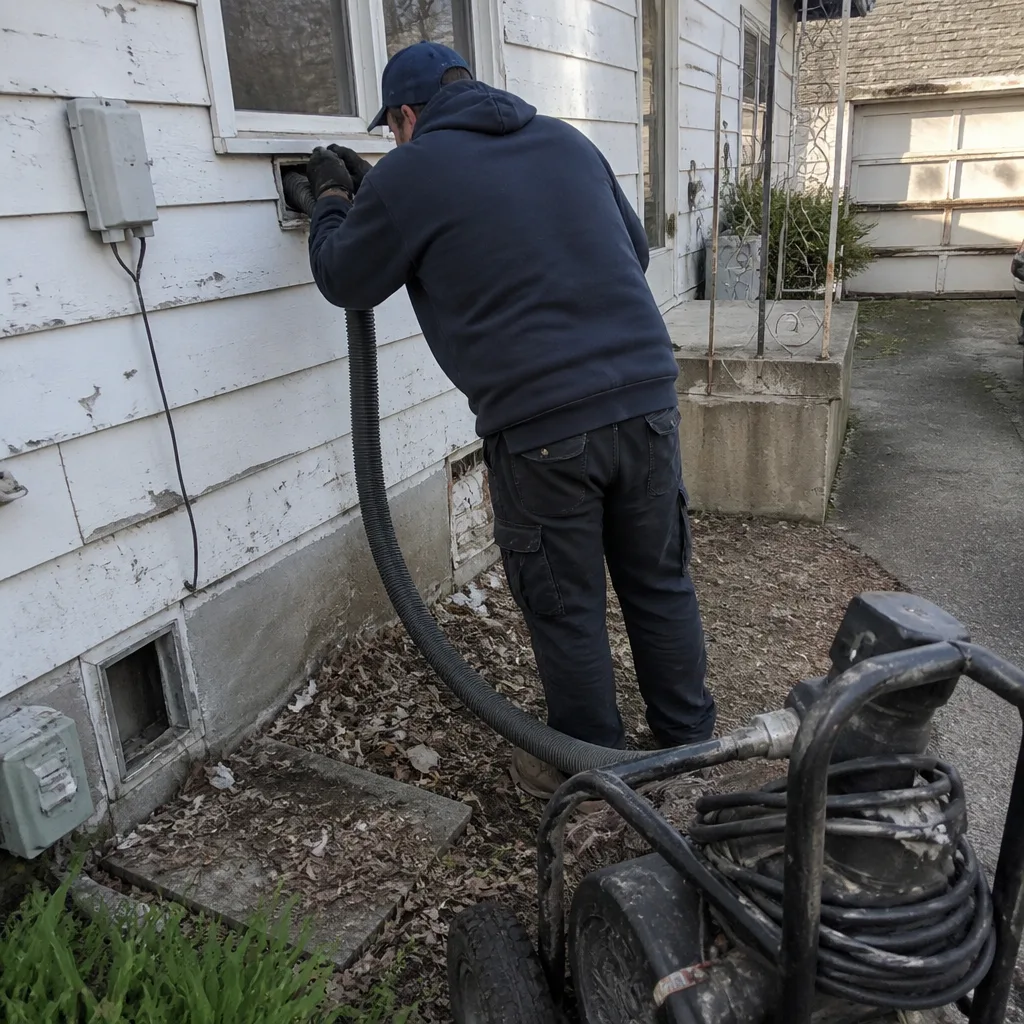 Before
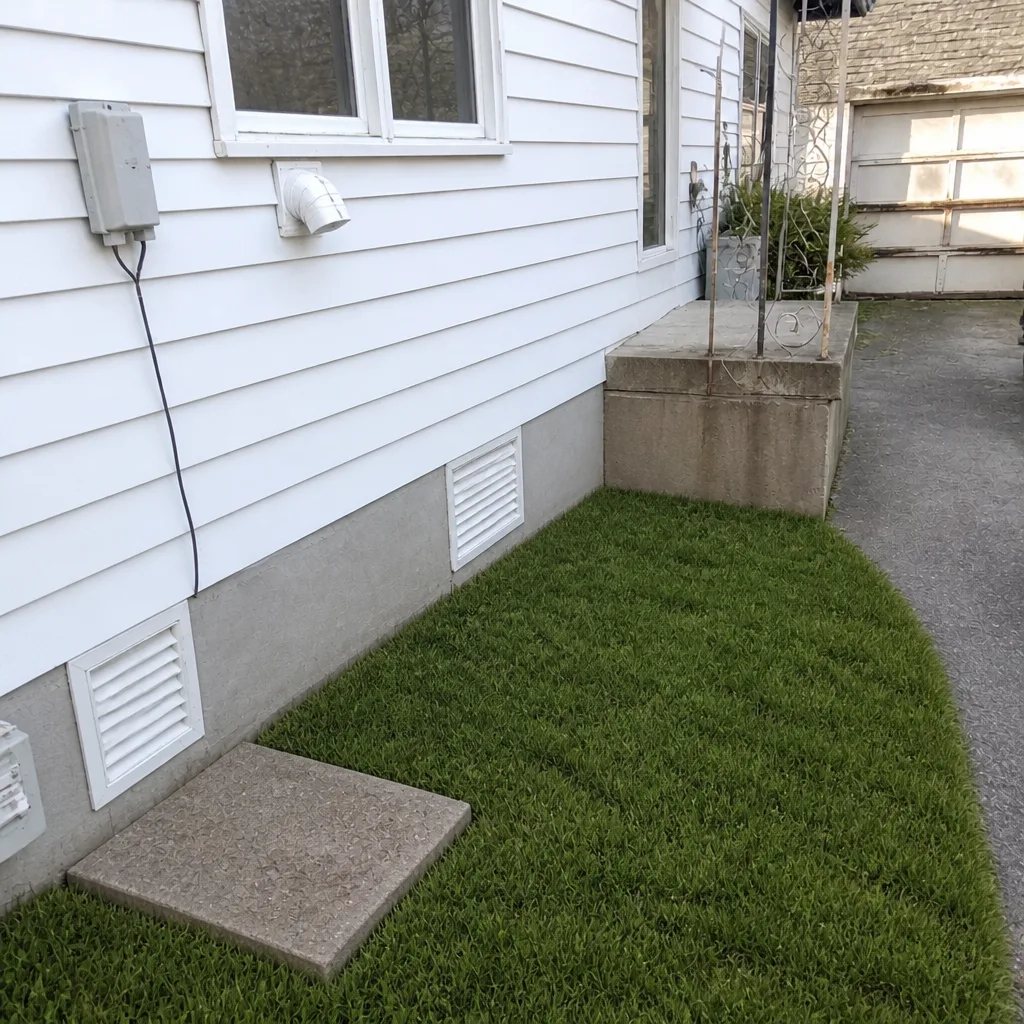 After
When to Call a Professional
Most Holmesburg homes can go years between duct cleanings without issue. But there are signals worth treating as a reason to call. Persistent dust settling within a day or two of cleaning, allergy-like symptoms that flare up when the HVAC kicks on, a musty smell coming from a register, longer dryer cycles with clothes that feel damp, or visible debris inside a supply register – these all point to a system that needs attention. If you’ve had a renovation or pest issue, if a critter has made its way into the ductwork, or if a recent inspection flagged moisture, the case for cleaning is stronger. Permits aren’t usually part of the conversation for these scenarios, but they can be if the fix turns into a duct replacement or reroute. Air Duct Cleaning Holmesburg offers free estimates in Holmesburg – call (877) 770-0234. We answer 24/7. Fast dispatch from 7am to 7pm, Sunday through Friday.
Frequently Asked Questions
No. Duct cleaning is a maintenance service, not a construction activity, so it falls outside Pennsylvania’s Uniform Construction Code and does not require a permit from Philadelphia’s Department of Licenses and Inspections. If a technician recommends duct replacement or system alteration during the visit, that work may require a permit, and it’s reasonable to ask before approving. Call (877) 770-0234 for a free estimate – estimates are free.
The City of Philadelphia’s Department of Licenses and Inspections handles permits for Holmesburg addresses. Holmesburg is a Philadelphia neighborhood, not a suburban township, so L&I is the code official you’d deal with for any permitted work. A contractor who frequently works in Bucks or Montgomery County may not have the right mental model for your address, and asking “Which code body handles my permit?” is a quick way to check. Call (877) 770-0234 for a free estimate.
No. Pennsylvania does not license mold remediation contractors, so there’s no state-issued credential to verify. That makes equipment, containment protocols, and post-remediation verification the things worth evaluating – not a license number. For significant contamination, an independent industrial hygienist may be worth bringing in before remediation begins. Call (877) 770-0234 for a free estimate.
Cleaning removes lint from an existing vent run and requires no permit. Rerouting moves the vent’s exit to a new location on an exterior wall, which is generally a construction activity and often requires a permit from L&I. If a technician recommends a reroute, ask explicitly whether the fix requires a permit and who is responsible for pulling it. Call (877) 770-0234 for a free estimate.
Duct replacement is generally treated as an alteration to the mechanical system and typically requires a permit from L&I. That’s the answer for a full replacement or a substantial rerouting. Small repairs to accessible joints fall on the maintenance side. If you’re unsure which category a recommendation falls into, the safe move is to ask before signing off. Call (877) 770-0234 for a free estimate – we’ll tell you where the line is.
There is no code-mandated frequency for residential duct cleaning in Pennsylvania. The right interval depends on your home – pets, recent renovations, moisture issues, and filter habits all shift the answer. A common sense rule for a Holmesburg rowhouse with normal use is every few years, and sooner if any warning signal comes up. Call (877) 770-0234 for a free estimate.
The Bottom Line
Here’s the short version. Air duct cleaning itself requires no permit in Holmesburg or anywhere else in Pennsylvania. It’s maintenance, not construction. The adjacent work is where the code question comes in – duct replacement, HVAC cabinet modification, register additions, dryer vent rerouting, and remediation that opens finishes can all require a permit from Philadelphia’s L&I. Pennsylvania doesn’t license mold remediation contractors, so evaluate equipment, containment, and verification instead of a credential that doesn’t exist. And Holmesburg’s older rowhouse stock means duct joints and moisture are the practical issues to watch. Get a written scope and a clear answer about permit responsibility before work begins. Call (877) 770-0234 for a free estimate. We answer 24/7. Fast dispatch from 7am to 7pm, Sunday through Friday.
Written by the team at Air Duct Cleaning Holmesburg.