
Last updated November 25, 2026
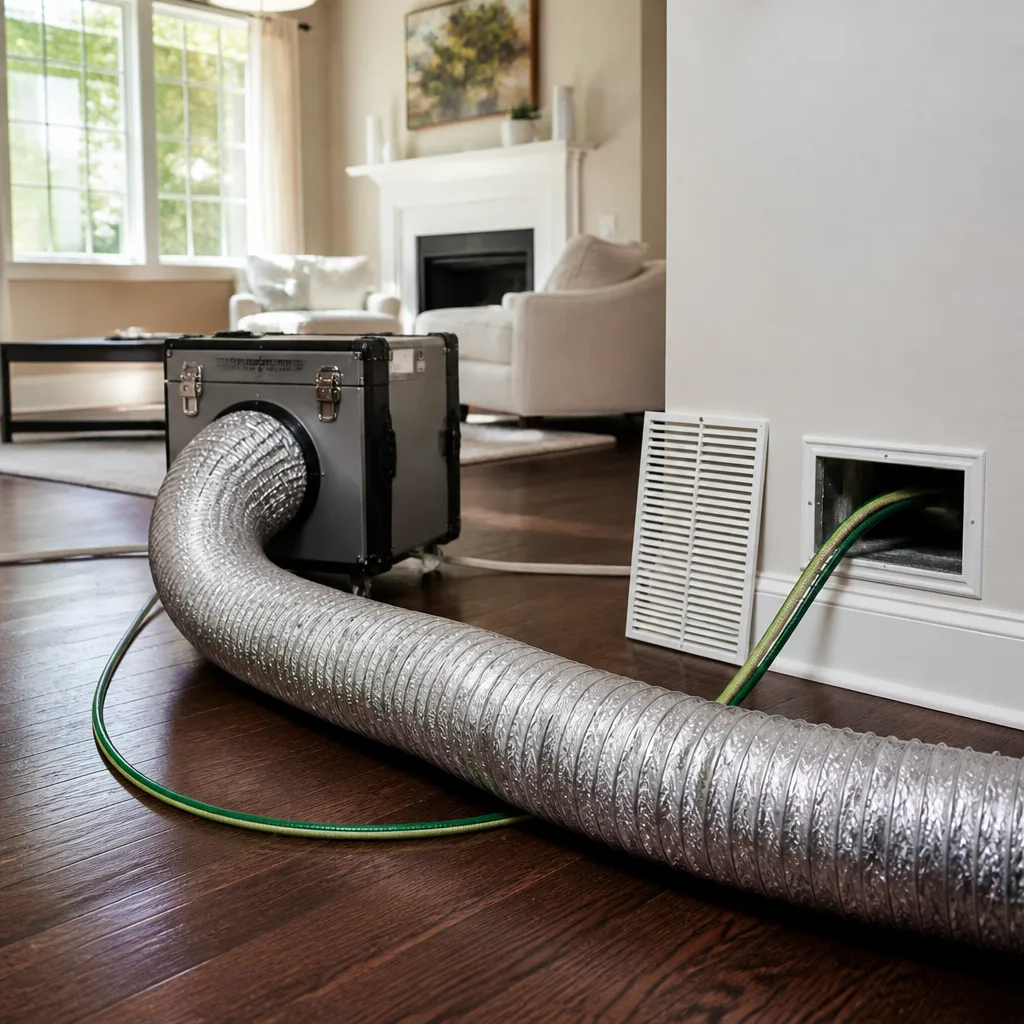 Whole-home duct cleaning
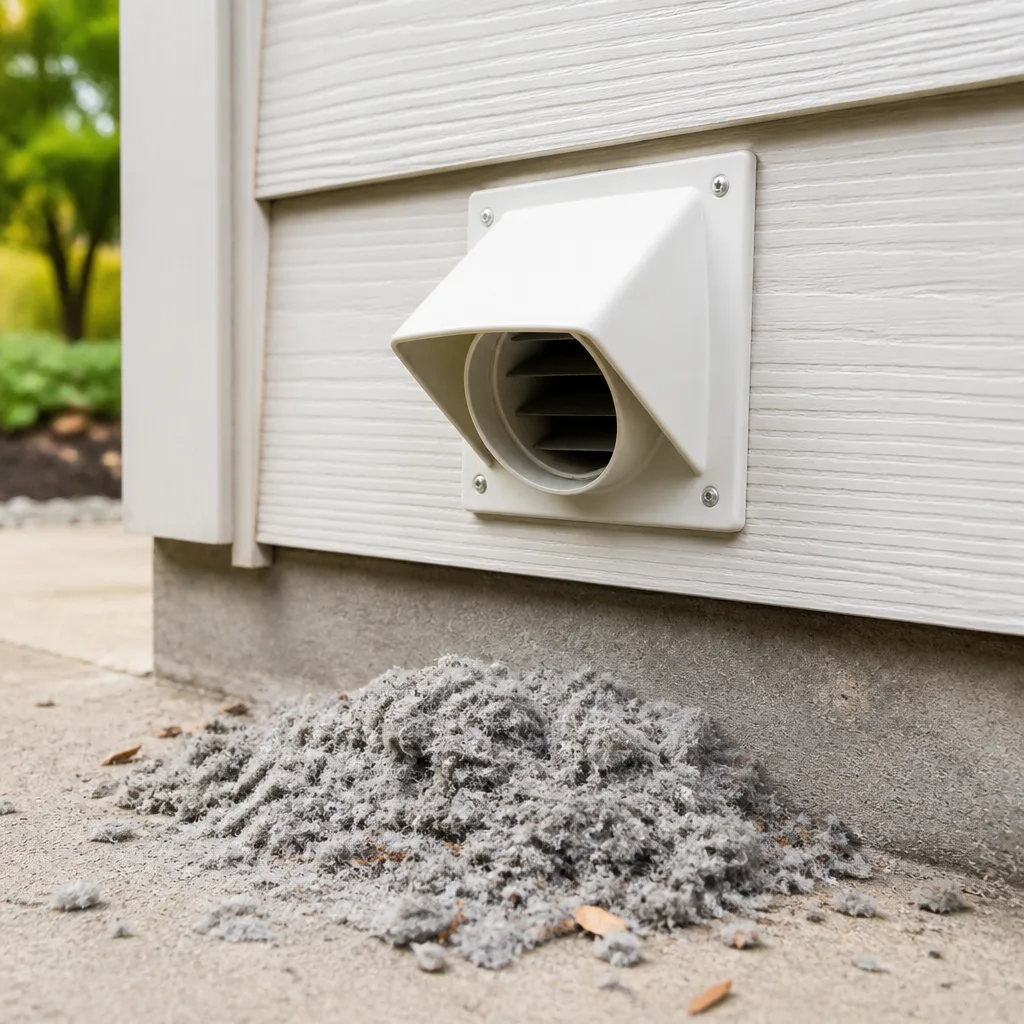 Dryer vent cleaning
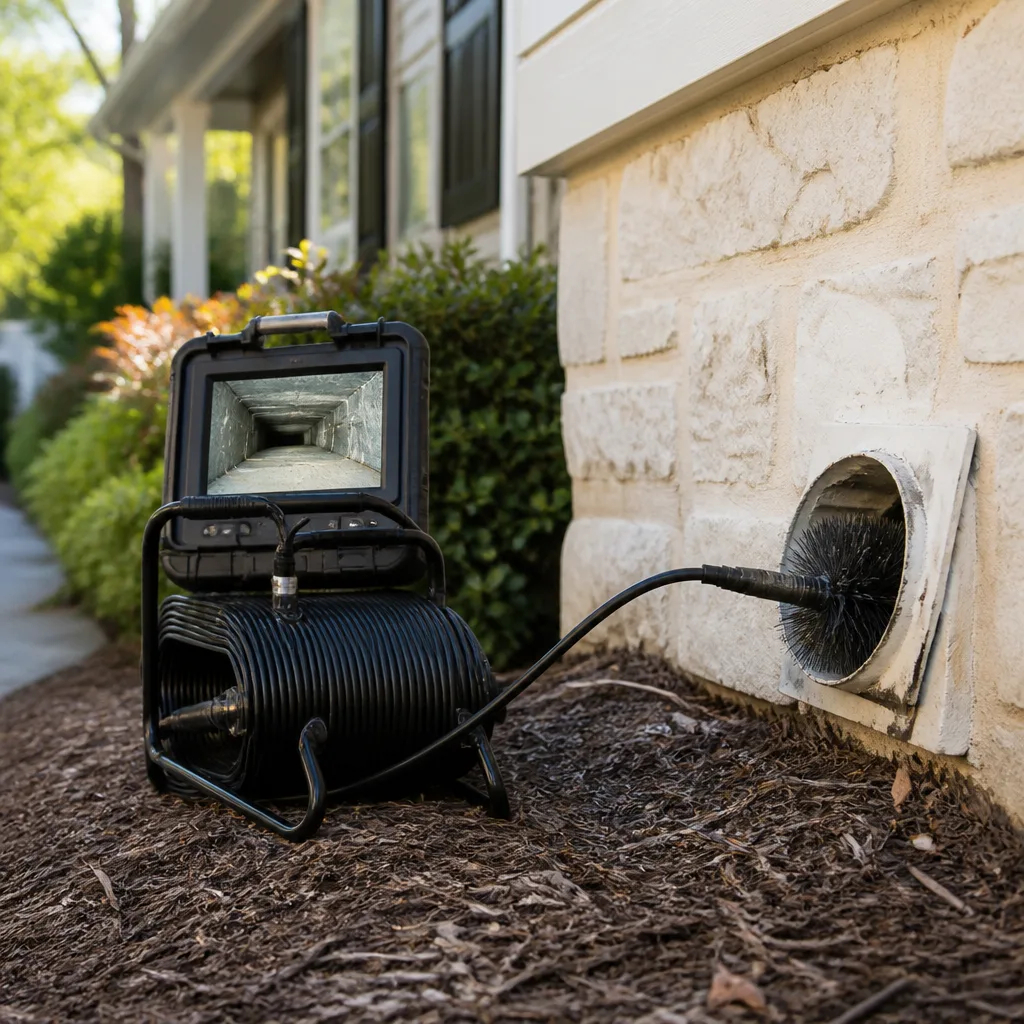 Camera inspection
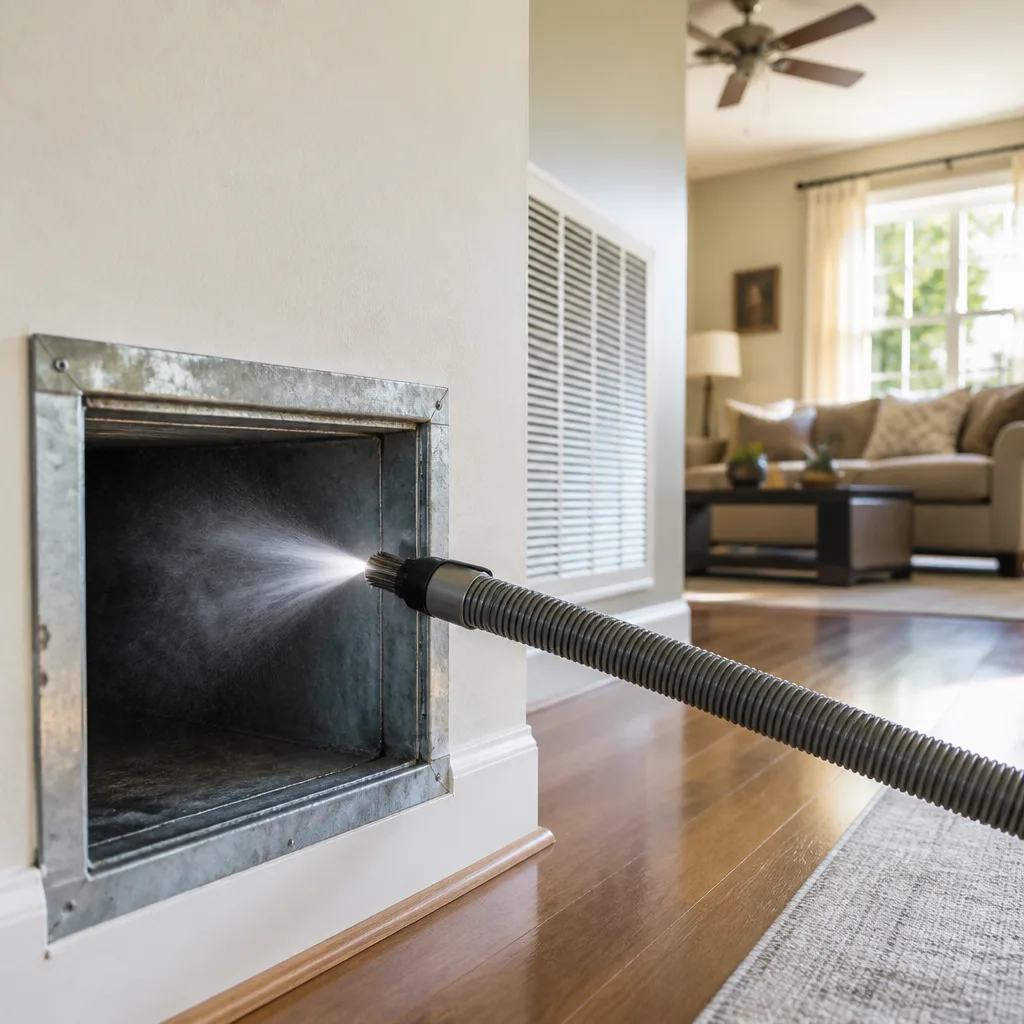 Sanitizing & deodorizing
Whole-system duct and dryer vent check with before-and-after photos - you see exactly what came out of your vents
That "$99 whole-house special" is a bait ad - the real number appears once they are in your hallway, or the "clean" is a shop-vac at the register. We photograph the inside of your ducts before and after instead.
How to Hire an Air Duct Cleaning Contractor in Holmesburg: A Step-by-Step Guide
Any person with a shop vac and a website can legally offer air duct cleaning in Pennsylvania. That’s the uncomfortable truth behind this whole industry, and it’s why a stack of certifications on a homepage tells you less than the answers you get to five equipment questions. In Holmesburg, where most of the housing stock runs from mid-century rowhouses to older twins, a low bid usually means a surface vacuum and a promise, not a full-system job. This guide walks you through vetting a contractor the way a professional would: what to ask before the estimate, what a written scope must contain, how to spot a bait-and-switch bid, and what you should see with your own eyes before anyone gets paid.
Quick Answer
To hire an air duct cleaning contractor in Holmesburg, get a written scope of work that names the equipment used and covers every duct run, trunk lines and the HVAC unit itself, then verify the equipment during the visit. In Pennsylvania there is almost no licensing barrier for duct cleaning, so your own vetting – not a credential check – is what actually protects the job.
Styles & brands we work with
- Whole-home duct cleaning
- Dryer vent cleaning
- Camera inspection
- Sanitizing & deodorizing
Table of Contents
- Why Vetting Matters More Than Credentials in Holmesburg
- The Five Equipment Questions That Separate Professionals from Beginners
- What a Written Scope of Work Must Include
- Low-Bid Tactics and How to Spot Them
- What a Professional Post-Job Walkthrough Looks Like
- Dryer Vent Cleaning: The Scope Item Everyone Forgets
- The Step-by-Step Hiring Process
- Holmesburg Weather, Housing, and What It Means for Your Ducts
Why Vetting Matters More Than Credentials in Holmesburg
Pennsylvania does not require a statewide license to clean air ducts. That single fact reshapes how you should hire. In trades where a license is mandatory, the state has done the first round of screening for you – you can check a number and rule out the worst operators. Duct cleaning doesn’t work that way. The barrier to entry is a truck, a vacuum and a phone number, and the state isn’t checking any of it.
What that means in practice is that a logo, a uniform and a claim of “certified technicians” prove very little. Some of those certifications are legitimate industry training programs. Some are pay-a-fee badges. Neither one stops a crew from running a surface vacuum through your registers and calling it a day.
So the vetting falls to you, and it comes down to questions the wrong operator can’t answer cleanly. Ask about the vacuum’s airflow. Ask about the brush and the negative-pressure setup. Ask which brand of containment equipment they carry. Someone who does this work at a professional level will answer in specifics – and someone running a shop vac will get vague fast.
What this means for older Holmesburg housing
Holmesburg’s rowhouses and twins often have original duct runs, ceiling registers set into plaster, and basements that have been finished and refinished over the decades. Duct work in homes like these is rarely straight and rarely documented. A contractor who plans to pull a brush through each register and leave doesn’t have a method for tie-ins, forgotten branch runs, or leaks at the seams. You want someone who inspects the system first and tells you what they found before work starts. That’s the difference between a cleaning and a guess.
The Five Equipment Questions That Separate Professionals from Beginners
Equipment tells you what a company can actually do. These five questions are the core of vetting any air duct cleaning contractor in Holmesburg, and the answers should give you real specifics rather than descriptions. Print them out and ask them on the phone before anything gets booked.
- What’s the CFM rating on your vacuum? CFM means cubic feet per minute – the airflow the machine can pull. A professional truck-mounted or high-capacity portable unit moves thousands of CFM. A shop vac moves a small fraction of that. Ask for the number. If the answer is “it’s a really strong vacuum,” that’s a non-answer.
- What type of brush do you use? Contact cleaning means a rotating brush or whip physically agitates the dust off the duct walls so the vacuum can carry it away. Vacuuming alone leaves the film behind. Professional systems like Rotobrush use brushes sized to the duct to make contact without damaging flex or sheet metal.
- How do you create negative pressure? Negative pressure means the system is under suction so loosened debris travels into the collection unit and not into your living space. A professional setup pulls vacuum through a main trunk connection and seals off the rest. A shop-vac rig lets dust drift into the room.
- Do you have HEPA containment? HEPA filtration traps fine particles at the exhaust so what comes out of the machine is cleaner than what went in. Negative-air equipment from brands like Abatement Technologies is built for containment-level extraction, which matters most in older or moisture-affected homes.
- Do you inspect with a camera? A camera run through the ductwork lets the technician see contamination, disconnected joints, crushed runs and rodent evidence that a flashlight at the register can’t. Camera capability is also what lets a contractor find problems before charging you for work.
What the answers should look like
Strong answers are specific. They mention the equipment brand, mention what gets inspected and mention how the system is sealed during cleaning. At Air Duct Cleaning Holmesburg, our technicians have up to 12 years of experience and work with Rotobrush contact-cleaning systems and Nikro professional HVAC vacuum equipment. When you ask the same questions of anyone you’re considering, specifics are the signal.
What a Written Scope of Work Must Include
A verbal promise that “we clean the whole system” is unenforceable. A written scope is what you hold someone to. Get it before the estimate turns into a job, and read it line by line. The scope should be boring and specific, and if it’s vague, ask for it in writing before work starts.
A proper scope for air duct cleaning covers:
- Every duct run and register, counted. Not “all vents” – a number, and if there are more than the number, the price doesn’t change mid-job.
- Main trunk lines explicitly. Many low bids clean the branch runs and skip the big trunks, which are where the bulk of the debris settles.
- The HVAC air handler and blower compartment, cleaned as part of the system, not sold as a separate line after the fact.
- The type of equipment being used – vacuum, brush, negative-pressure setup, containment.
- Access and re-sealing: where the technician cuts access points, and how those are sealed afterward so the system is left as tight as it was found.
- Disposal of what’s collected.
- The flat price for the whole system, agreed before work starts, with no per-vent charge.
Why scope wording matters so much
If the scope doesn’t state trunk lines, an operator can complete exactly what was written and still leave the majority of the debris in place. Same if it doesn’t state the air handler, or doesn’t say access points get re-sealed. None of that is dishonest in a legal sense – it’s just what “the whole system” turns out to mean after the fact. The written scope is the only place to close that gap.
Ask about repair in the same scope
Ask whether duct repair and sealing are part of the conversation. On older Holmesburg homes it’s common to find loose joints and holes once the system is under negative pressure – and the alternative to same-visit repair is booking a second contractor. A company that can repair what it finds is telling you something about how it works.
Low-Bid Tactics and How to Spot Them
Air duct cleaning has a bait-and-switch reputation for good reason. The low up-front number is the hook, and once the crew has access panels open and dust flying, the invoice has a way of growing. Here are the tactics that show up most often, and how each one is caught early.
Per-vent pricing that excludes trunk lines
A bid priced “per vent” is priced to win the phone call, not to clean your ducts. The number of registers is easy to quote, and the price it produces looks attractive – but trunk lines, the air handler and the return runs aren’t in it. A per-vent bid on a Holmesburg rowhouse often becomes double or more once the missing pieces are added. Ask what the flat price covers and demand trunk lines be in writing.
Upsells triggered once panels are open
Opening access panels is the moment a low bidder has leverage. Suddenly there’s a “problem found” that costs extra to fix, and you’re already committed. The defense is a written scope plus the rule that any additional work gets priced in writing before it’s done, and you can say no.
Mold claims used to sell unnecessary fogging
“We found mold in your ducts, you need our fogging service” is one of the most common scare pitches in the industry. Real moisture problems are possible in older homes, but a mold claim from the same crew that just opened the panel is worth verifying – and a fogging service doesn’t fix a moisture source. Ask what was found, where, and how it was identified. A company with camera inspection can show you. A company selling fog isn’t usually showing you anything.
The price that grows on the invoice
Watch for line items labeled “disposal,” “extra access,” “heavy soiling surcharge,” or “equipment fee” appearing only after the work is done. If it wasn’t in the written estimate, you shouldn’t be paying it as a surprise. One flat price per system, set before anyone cuts a panel, avoids the whole situation.
What a Professional Post-Job Walkthrough Looks Like
The job isn’t done when the crew packs up. It’s done when the technician walks you through what they did and shows it to you. A professional walkthrough should be physical and unhurried, and you should feel free to ask to see each step. Here’s what that looks like in order.
- The camera run. Before cleaning, the technician shows you what they found – filmed inside the duct. After cleaning, they show you again. Before-and-after photos of your own system are the proof, not a stock image on a website.
- The access points. Every point where the system was cut open is pointed out and confirmed re-sealed, flush, with no leaks left behind.
- The collection unit. Whoever did the job should be willing to show you what was extracted and how much came out of the system.
- The air handler. If the HVAC unit was cleaned, the technician should open the panel and show you a clean blower compartment. This is often where a surface job reveals itself – the blower compartment is where a rushed crew doesn’t go.
- The dryer vent. If that was in scope, they should show you the vent was cleared end-to-end and confirm the exterior flapper moves freely.
- The written summary. What was cleaned, what was found, what was repaired, and what if anything needs follow-up.
What you should physically see
You should physically see the camera footage, the sealed access points, and the air handler compartment. A company that skips the walkthrough isn’t hiding much time – they’re hiding the evidence that the job was shallow. That’s why Air Duct Cleaning Holmesburg includes before-and-after photos as standard: the process is how you judge the result.
Dryer Vent Cleaning: The Scope Item Everyone Forgets
Dryer vent cleaning is a separate service from air duct cleaning, and most homeowners don’t realize it’s a different job with different equipment – which is exactly how it gets bundled dishonestly. Some duct cleaners skip it entirely because it doesn’t fit their main route. Some upsell it poorly, running a quick pass and calling it done. Either way, you want it asked about explicitly, not assumed.
The safety case is simple. A clogged dryer vent traps lint, and lint is what burns. Longer and longer cycles are the early warning – when normal loads start taking twice as long to dry, the vent is restricting airflow well before anything catches. A professional dryer vent cleaning clears the entire run from the dryer to the exterior flapper, not just the section a shop vac can reach from the outside.
What to ask about dryer vent cleaning
- Is the vent run cleaned end-to-end, not just at the exterior?
- Is the exterior flapper tested after cleaning?
- Is the flexible transition duct behind the dryer inspected for kinks or crush points?
- Is this a separate line in the written scope, or bundled in one flat price?
- Is the vent run something they can physically reach, or do they need special brush lengths?
Ask all five. A contractor who can answer them is treating the vent as the safety system it is. A contractor who “cleans it while we’re there” without confirming the run length and access probably isn’t clearing it.
The Step-by-Step Hiring Process
Hiring this trade doesn’t need to be a long process. Do it in this order and it’s over in one afternoon of calls.
- Ask the five equipment questions. CFM, brush type, negative pressure, HEPA containment, camera inspection. Note the specificity of the answers, not just the yes or no.
- Request a written scope of work. Have each company email it. Compare line items side by side. The scopes should name trunk lines, air handler, duct runs, repair and re-sealing.
- Confirm the price is flat, per system. No per-vent charge, no extra fees that appear after the work is done. The written estimate should say the price is set before work begins.
- Ask what happens if a problem is found. Duct repair and sealing from the same visit is a sign the scope is complete. A separate vendor for every finding means more scheduling, more invoices, and more opportunities to re-open the system.
- Book the service and ask for camera footage or before-and-after photos. This is where HVAC cleaning should be part of the scope if the air handler hasn’t been cleaned.
- Walk through the job after the work. Access sealed. Air handler shown. Vent cleared if in scope. Written summary in hand.
The clean-air sanitizing question
Some contractors carry air-quality sanitizing as a line item, and it’s worth asking whether the sanitizing addresses a specific problem found in the ductwork, or is offered as a flat add-on. A professional-grade company will use product lines it understands – Aprilaire and Honeywell are the names to watch for – and can explain what each step does for the system. If the sanitizing is just a fogging routine applied to every job, ask what it’s treating.
Holmesburg Weather, Housing, and What It Means for Your Ducts
Holmesburg sits in Philadelphia’s humid subtropics – hot and sticky summers, cold winters, and long stretches of both where the HVAC system runs hard. That matters because moisture is the variable that changes what’s living in your ductwork. When the system runs for months with condensation in the air handler and cooled air moving through insulated flex ducts, dust that would otherwise stay dry can become the environment for biological growth. It’s not a certainty. It’s just why the older Holmesburg homes in this climate get more mileage out of a camera inspection than a home in a dry climate does.
The housing stock matters too. Many Holmesburg rowhouses were built with duct runs that took short paths and hard turns, and later renovation has often buried some of them behind finished walls. A contractor who works the neighborhood regularly knows to look for capped branches and abandoned runs. A contractor who doesn’t may never learn they exist.
What to ask because of the local climate
- Is the air handler inspected for standing water or moisture staining, not just cleaned? This is a coverage question the estimate should answer.
- Are the return ducts included, or just supply? Returns carry the heaviest load of dust in any system.
- Is the sanitizing step informed by what’s found, or is it just a fog-and-bill line item?
- Are there duct runs that have been capped or sealed off behind a wall, and are they included in the scope?
- Does the company confirm the system’s static pressure after cleaning and re-sealing? That’s the measure of whether they left it as tight as they found it.
Common Mistakes to Avoid
- Choosing the lowest per-vent quote. It’s cheap because it’s narrow. The trunks and air handler aren’t in it, and the real price arrives after the panels are open.
- Accepting a verbal promise of “the whole system.” Verbal scope isn’t enforceable. Everything that isn’t in writing is optional once the crew is on site.
- Not asking what equipment will be used. “Professional equipment” is a phrase, not a fact. CFM rating, brush type, containment brand – ask for the answers, don’t take the description.
- Skipping the camera inspection. Without it, neither you nor the technician knows what the inside of the system actually looks like, and there’s no evidence either before or after.
- Forgetting the dryer vent. It’s a separate service and a genuine fire-risk item. If it isn’t in the scope in writing, it’s probably not being done thoroughly.
- Accepting a mold claim without evidence. A “found mold in the ducts” pitch from the crew that just opened the panel should come with camera footage or a clear identification. Fogging doesn’t fix a moisture problem.
- Not walking the job afterward. If the technician packs up and leaves without showing you the access points, the air handler, or the before-and-after photos, you have no proof the work was done to the scope.
See the difference
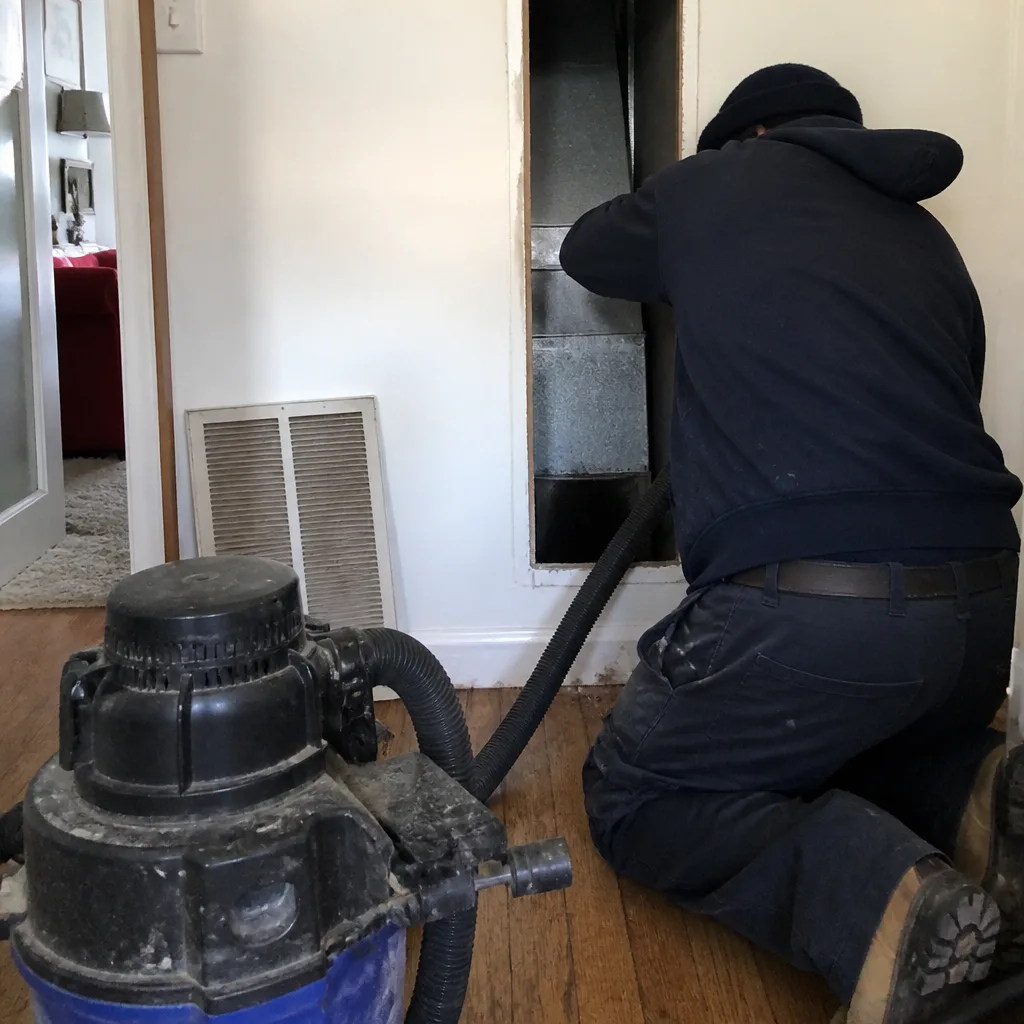 Before
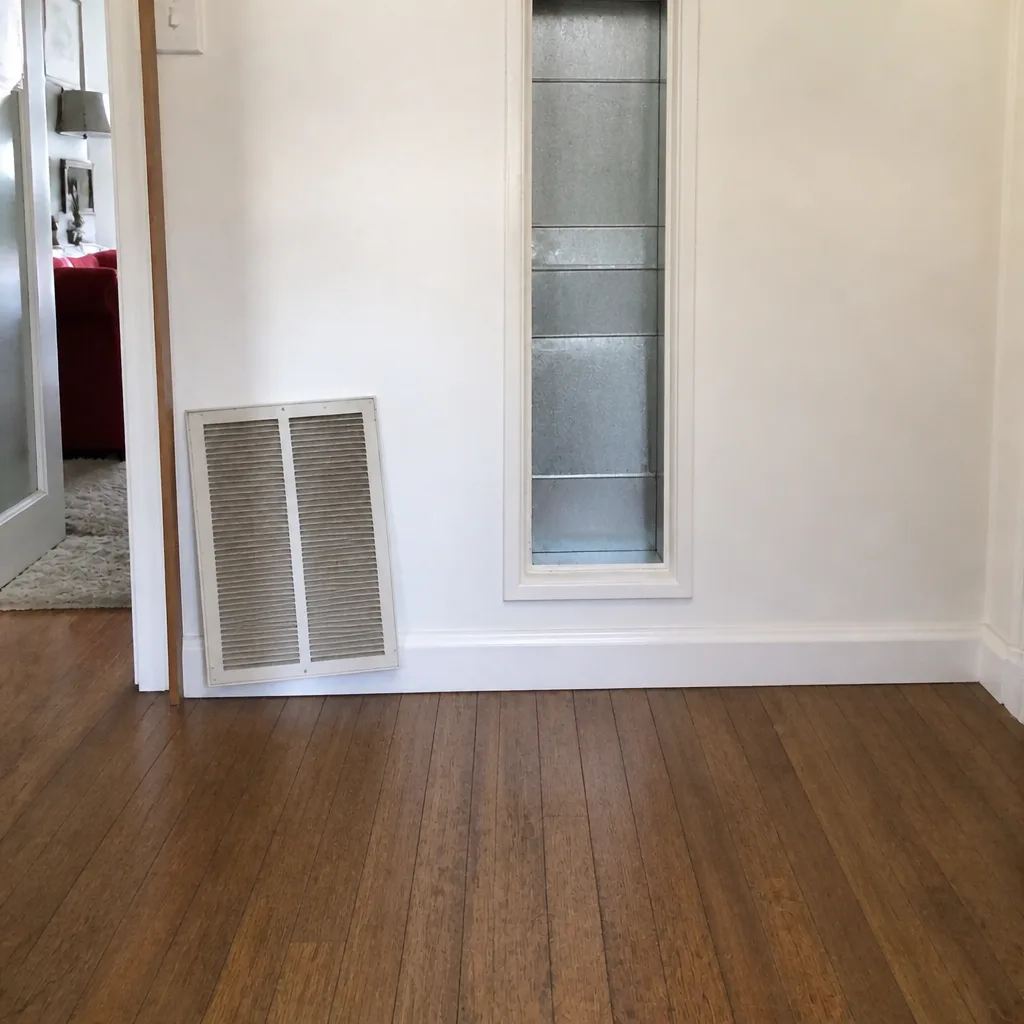 After
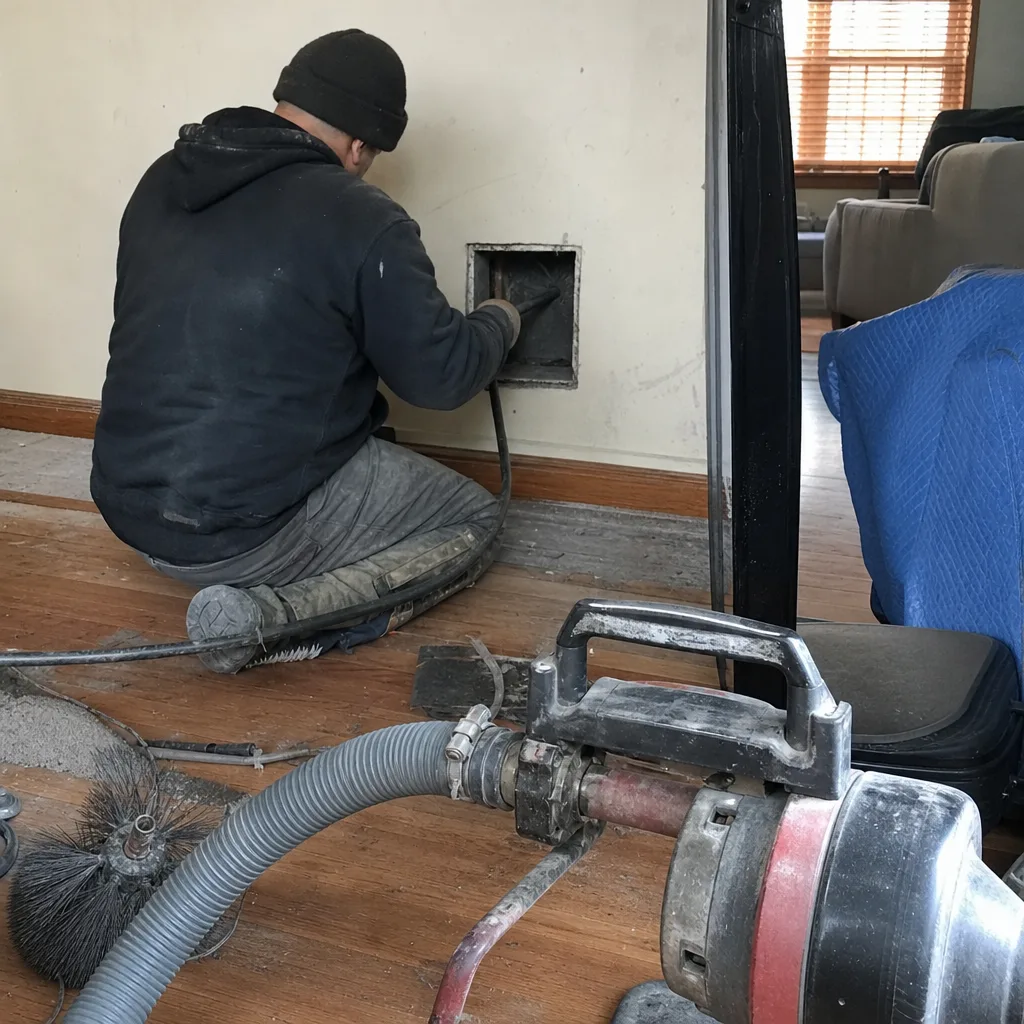 Before
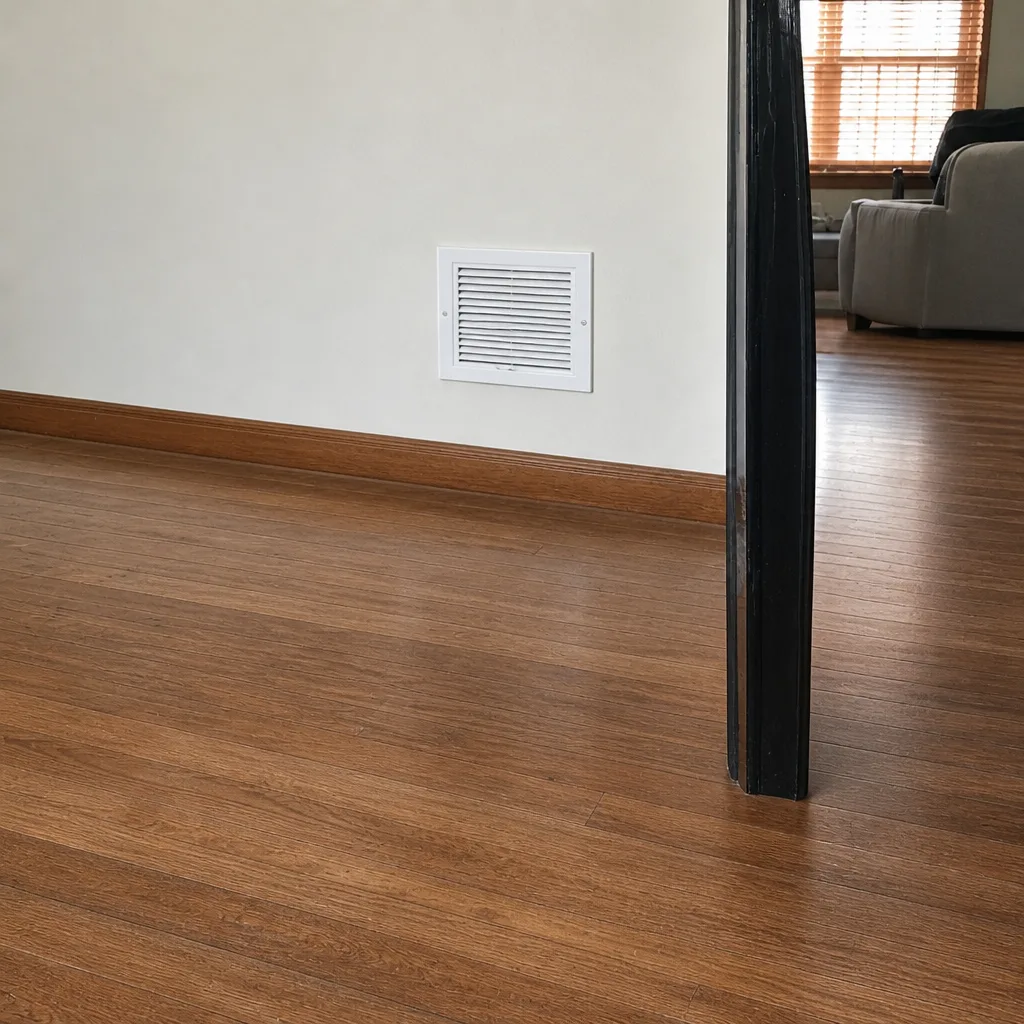 After
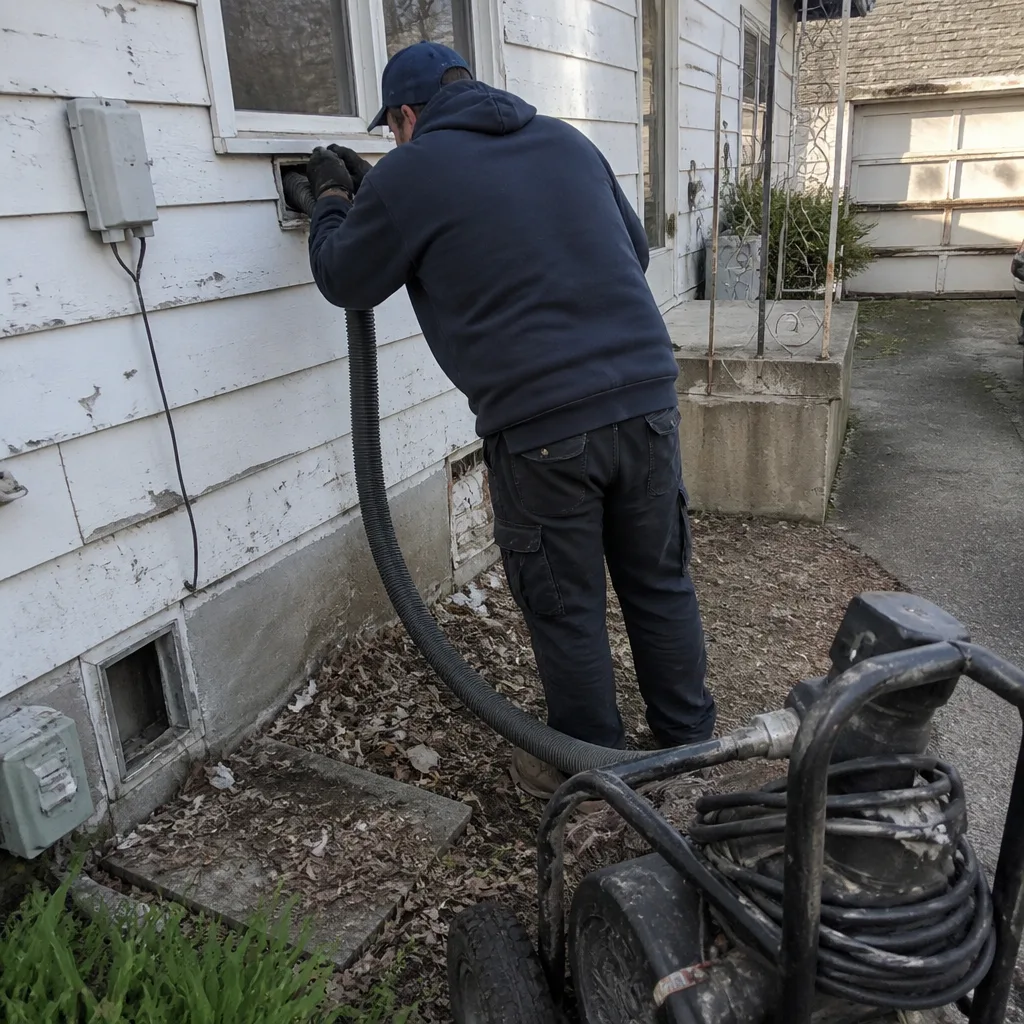 Before
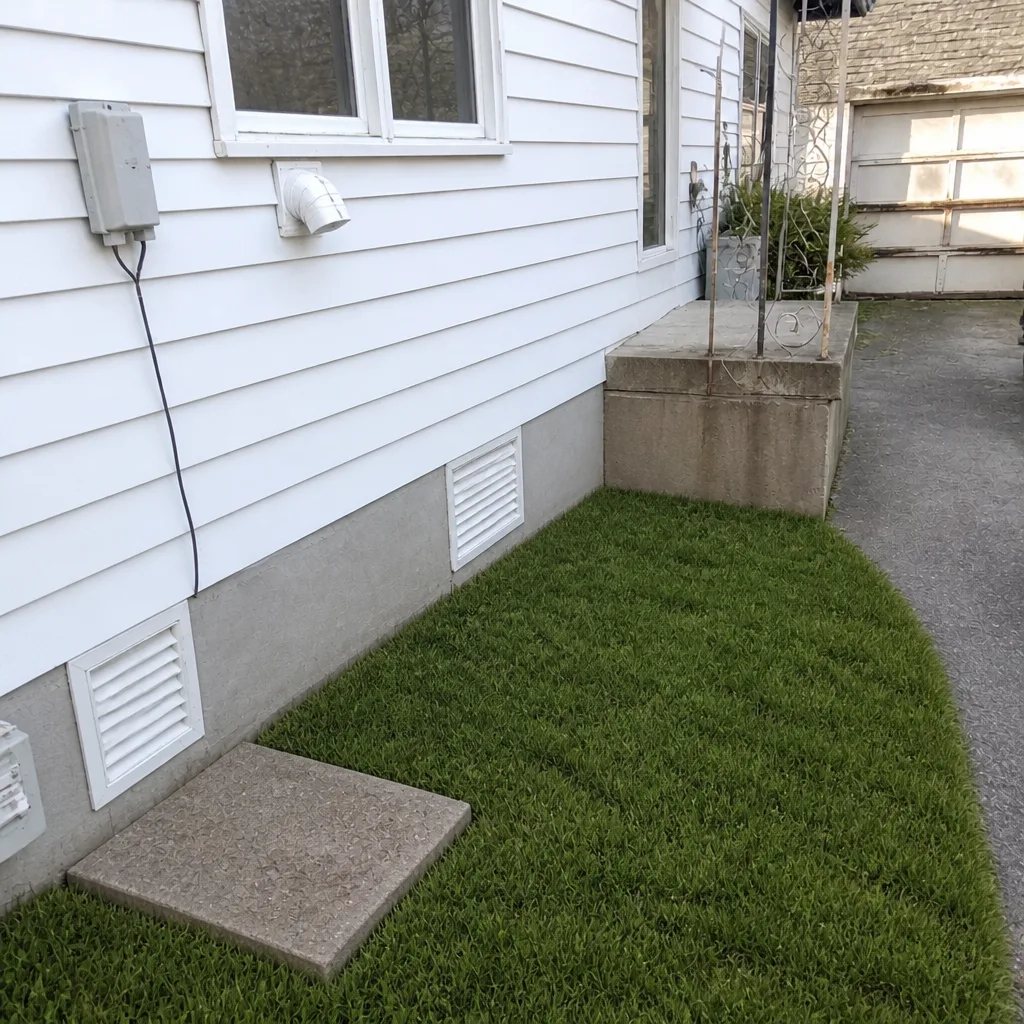 After
When to Call a Professional
Some problems you can smell and feel before you can see them. If the house has taken on a stale or musty note that lingers after a cleaning, or allergy symptoms flare in every room and the HVAC filter isn’t the cause, the system itself is worth inspecting. Falling airflow at registers – cool air felt at some vents and barely at others – points to a blocked or disconnected run. Unexplained dust film on every surface, especially after the HVAC has run hard, is another sign. And with dryer vents, longer cycles are your warning: when normal loads start taking twice as long, stop using the dryer until the vent is cleared.
If any of that sounds familiar, a camera inspection tells you what’s actually happening inside the ducts instead of guessing. Air Duct Cleaning Holmesburg offers free estimates in Holmesburg – call (877) 770-0234. We answer 24/7. Fast dispatch from 7am to 7pm, Sunday through Friday.
Frequently Asked Questions
Air duct cleaning in Holmesburg is typically priced per system, not per vent, and the written estimate sets the final price. Whole-system pricing usually runs in the range you’d expect for a rowhouse or twin – ask each company for a flat, whole-system number in writing so you can compare scopes line by line rather than compare sticker prices. A per-vent quote isn’t comparable to a flat estimate because it tends to exclude trunk lines and the air handler. Call (877) 770-0234 for a free estimate.
Cheap quotes are cheap because they scope less work – usually registers only, no trunk lines, no air handler, vacuum only, no brush contact cleaning. Sometimes the low bid is a hook, and the price rises once the panels are open. The comparison that matters isn’t the two up-front numbers; it’s the two written scopes. If one doesn’t mention trunk lines, HVAC unit cleaning and re-sealing of access points, that’s where the difference lives. Call (877) 770-0234 for a written, flat-price estimate.
You know the work was done because you saw it – camera footage or before-and-after photos of your own system, sealed access points, a clean blower compartment, and a written summary of what was found and cleaned. A contractor who skips the walkthrough has left you without evidence. Ask for the photos and the camera footage as a standard part of the scope. Call (877) 770-0234 to book a job where that’s standard.
Most well-maintained homes don’t need duct cleaning on a fixed schedule; the trigger is usually a finding, not the calendar. Visible dust at registers, musty odor coming from the system, recent renovation, water intrusion in the air handler, or pets and allergy symptoms are the reasons to inspect. A camera inspection answers whether cleaning is warranted far better than a rule of thumb. Call (877) 770-0234 for an inspection and estimate.
You can clear lint from the exterior flapper and the flexible transition duct behind the dryer, which helps between services. What you can’t reliably reach is the long interior run through the wall, and that’s where lint builds up and restricts airflow. If dryer cycles are getting longer, a professional vent cleaning is the right call. The check is free and the price is set by written estimate. Call (877) 770-0234.
You need repair and sealing if the camera inspection finds disconnected joints, holes, crushed flex, or leaks at the supply and return tie-ins – which is common in older Holmesburg homes once the system is under negative pressure. Cleaning alone just loosens what’s there and doesn’t fix the leaks that let dust back in. That’s why we keep duct repair and sealing in the same visit rather than sending a second contractor. Call (877) 770-0234 for an inspection and written estimate.
The Bottom Line
In Holmesburg, the air duct cleaning industry has no real licensing gate, so your own questions are what stand between you and a surface job billed as a full-system clean. Ask the five equipment questions – CFM, brush, negative pressure, HEPA containment, camera – and get a written scope that names trunk lines, the air handler, access re-sealing, and one flat price per system. Ask about dryer vent cleaning explicitly, since it’s a separate service and a real fire-safety item. Watch for per-vent pricing, post-panel upsells and mold claims without evidence. Then demand the walkthrough: before-and-after photos of your own system, sealed access points, a clean blower compartment, a written summary. That’s the whole guide, and it’s what protects you from a bad hire in a trade where nobody’s checking for you.
Ready to put those questions to work? Call (877) 770-0234 for a free estimate. We answer 24/7. Fast dispatch from 7am to 7pm, Sunday through Friday. And when you’re comparing companies for air duct cleaning in Holmesburg, bring the checklist from this page to every call.
Written by the team at Air Duct Cleaning Holmesburg.